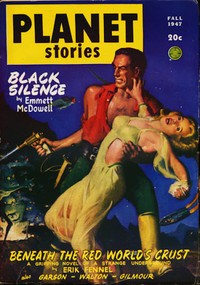
Six golden-age stories on the oldest question: what happens when we meet the other?
First contact is science fiction's primal scene, the hinge on which a thousand stories turn. Sometimes it arrives as wonder, sometimes as dread, sometimes as a joke at our expense. The golden-age writers worked every angle of it: the alien as invader, as neighbour, as mirror, as something so strange we can't decide which. This path walks six of those encounters, from an eerie afternoon in 1947 to a sly reversal in 1963, and asks the question each of them asks in its own way, when we finally meet what's out there, what will it make of us?
Sign in to track your progress through this journey.
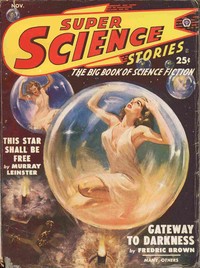
Murray Leinster, 1949. Leinster practically invented the first-contact story, and here he asks the hard, hopeful version of it: can two species that share nothing find a way to simply leave each other free?
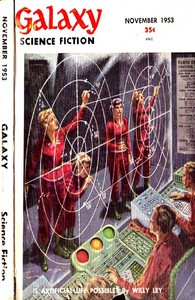
Robert Sheckley, 1953. Contact from the alien's side of the table, and it's an anxious, shape-shifting comedy of manners. Sheckley never met a cosmic premise he couldn't make wry and human.
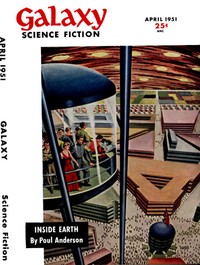
Poul Anderson, 1951. The invasion story flipped: we ride along with the would-be conquerors, and Earth is the strange and dangerous world. A sharp lesson in whose point of view you're trusting.
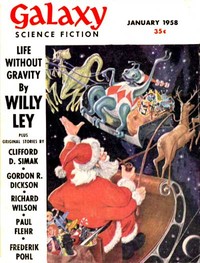
Clifford D. Simak, 1958. Simak brings first contact down to earth, pastoral, humane, and quietly devastating. Nobody wrote gentler aliens, or made gentleness cut so deep.
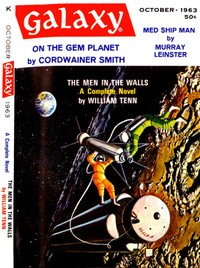
William Tenn, 1963. The reversal to end on: what if, to something vast enough, we are the vermin in the walls? Tenn's satire lands the journey exactly where it should, unsettled and grinning.